
More Than Pets
Story by Becky St. Clair
We’ve all heard stories of hero animals who have rescued people from danger, or of beloved pets who have left a significant impact on someone’s life. Some animals are specifically trained to aid, heal or provide comfort and companionship as we face life’s challenges.
Throughout the Bible, “ministry” is simply defined as meeting a need. Perhaps some of the most powerful examples of selfless, intentional care don’t come from the pulpit but from animals.
 A Quiet Presence
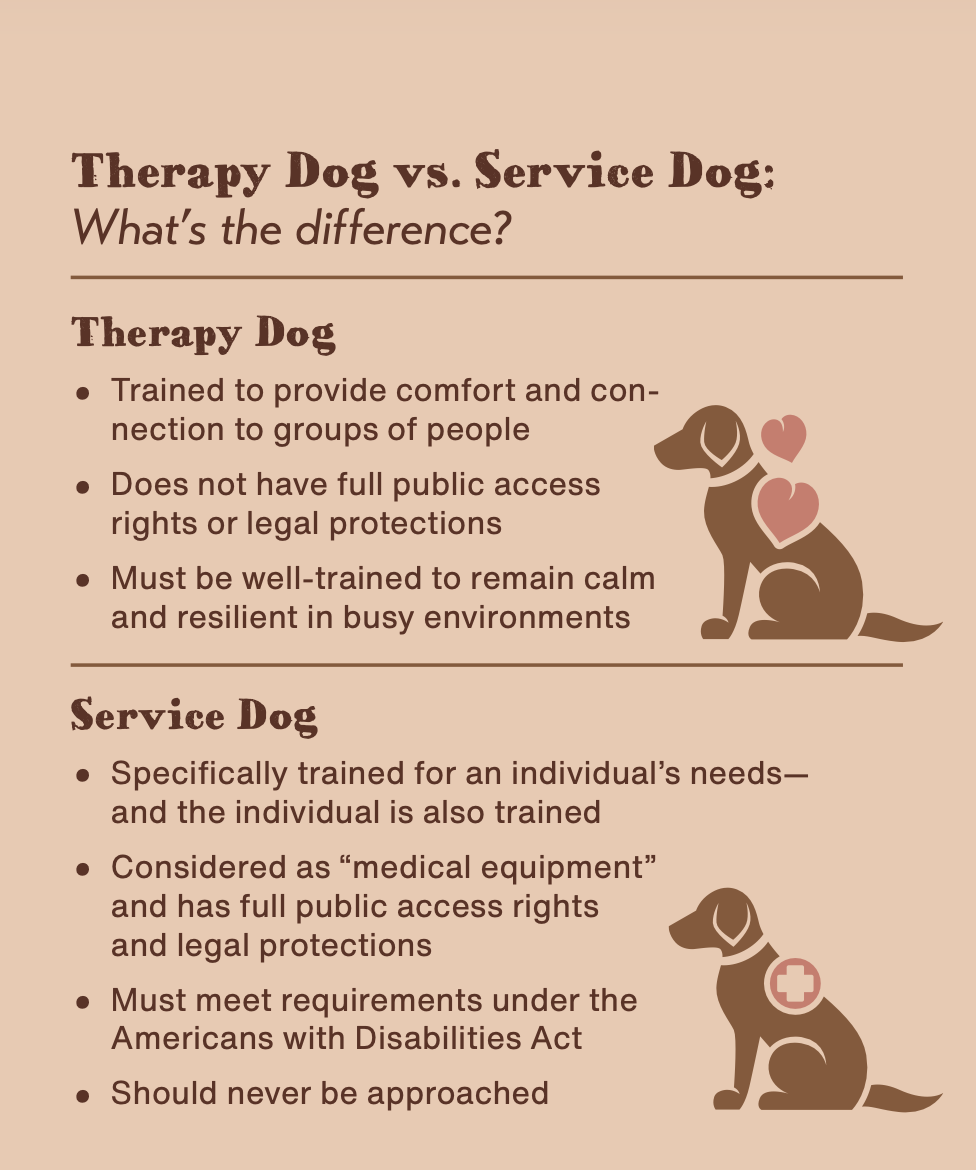
Leah is a 10-year-old Yorkiepoo (Yorkshire terrier-poodle mix) who weighs five pounds. She has a one-day-per-week job—and is very skilled at it. Leah is a trained and certified therapy dog that works primarily at Soin Medical Center–Kettering Health in Beavercreek, Ohio, with her handler, Mary Galloway.
Once Leah arrives at the hospital, she makes her way from patient to patient—and even visitor to visitor—sitting in laps, letting herself be petted, or simply letting her presence be felt.
“If I had a dollar for every time I heard ‘This is what I needed today’ after Leah visits someone, I’d be a wealthy woman!” Galloway says. “Maybe they’re in pain, they’re bored. … Sometimes they start crying because they miss their own animals so badly, and they appreciate the interaction with Leah.”
Sometimes Leah and Galloway escort patients into surgery, or Leah rides along on a patient’s lap while Galloway wheels them to where they need to go.
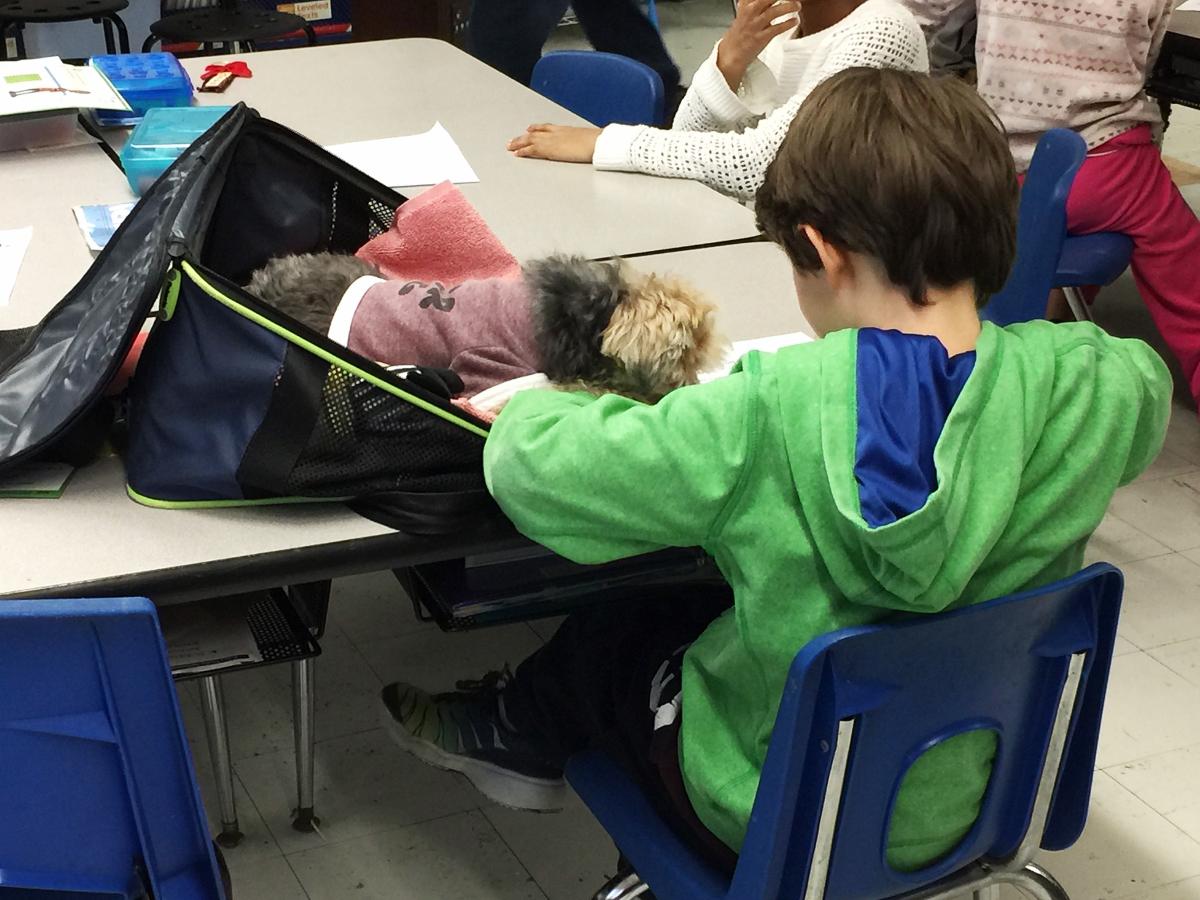
 As a retired teacher still on the substitute list, Galloway sometimes fills in at schools. And when-ever she’s called in, Leah joins her.
“I’ve had kids who have trouble focusing, and I …put Leah on her little bed next to them on [a] chair,” Galloway says. “I ask them if they can help me take care of Leah for the day, and while they pet her, they also stay focused on their work.”
Leah is one of thousands of therapy dogs across the United States who serve their communities this way, but dogs are not the only animals that help kids at school.
A Guide to Self-Regulation
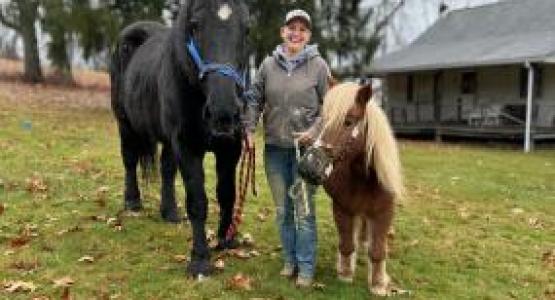
Once a month, Ilse Eisele, a longtime member of Potomac Conference’s Sligo church in Takoma Park, Md., and a licensed professional counselor, along with her business partner, Amber Power, equine specialist, take their horses to visit students in school.
“We talk the kids through how the horse handles different situations,” explains Eisele. “[We say], this is how horses deal with fears, or this is how horses make new friends. Then we talk about what we can learn from that.”
Together, Eisele and Power, along with their team, use Bella Terra Stables, their property in Murrysville, Pa., for equine therapy as part of targeted counseling work.
“The school will send 14 of their most struggling kids to come to our farm once a month for more intensive programming to learn more from the horses,” Eisele says.
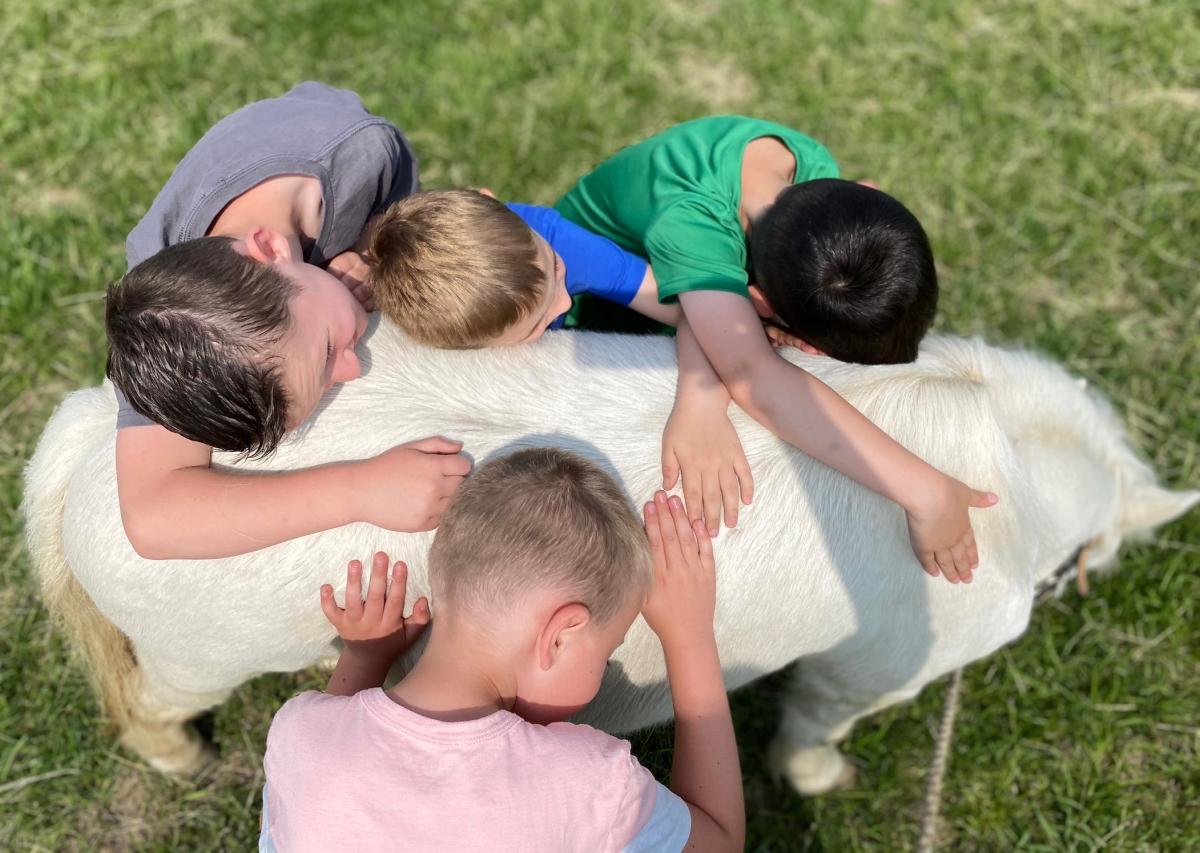
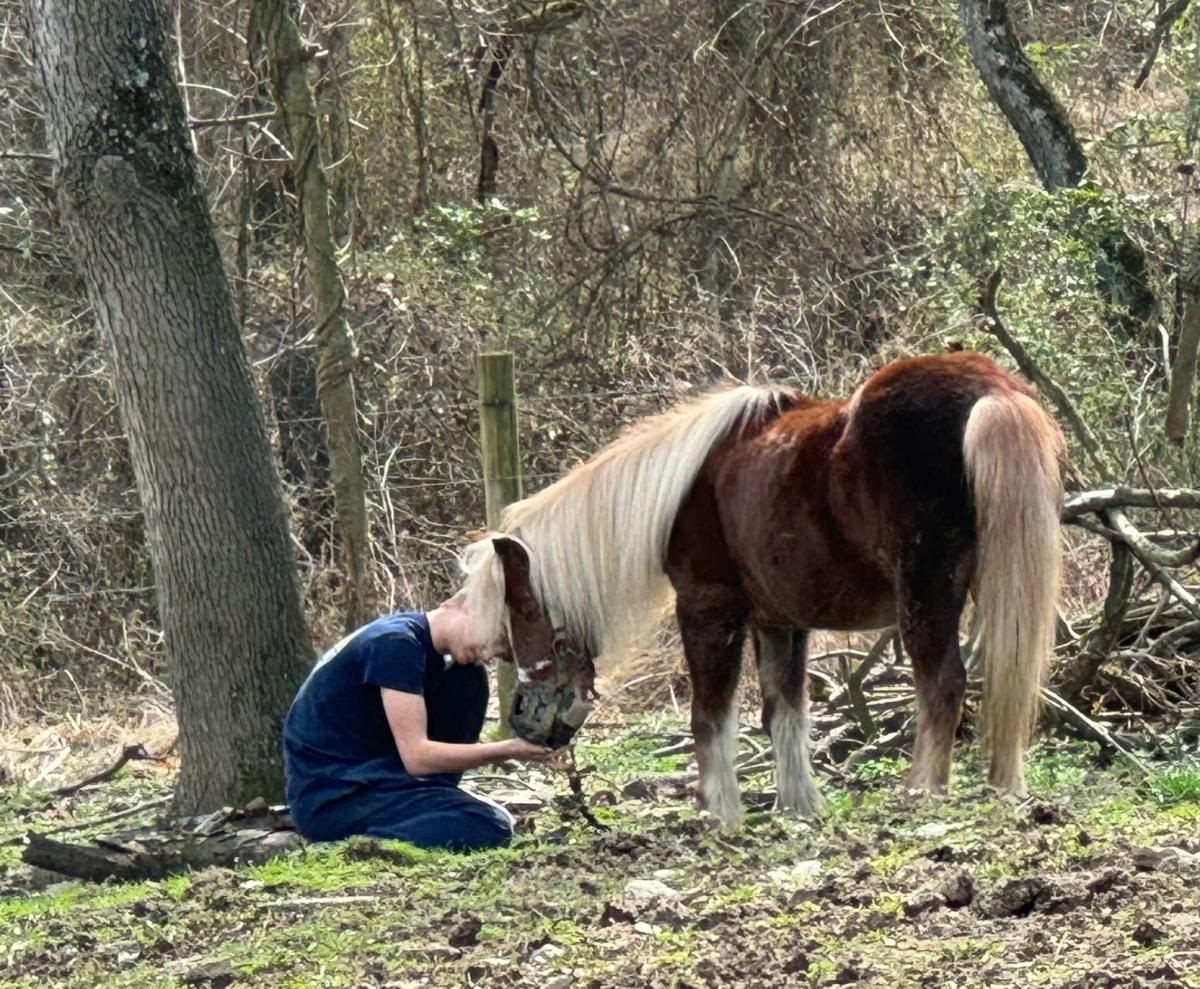 Each child is assigned a horse for the entirety of their stay, learning commitment and how to care for and connect with another living being. “We do group activities, learning life skills, such as how to manage emotions, [while] using examples of how horses handle their issues with other horses as our guide,” she states.
One time, a school sent 12 children engaged in grief therapy, all of whom had lost a parent within the previous year. A horse on the farm had recently passed away, and the horse’s friend—a pony named Buttercup—became the focus of the group’s work.
“We talked the kids through the fact that Buttercup had just lost someone very important in her life, and we needed to help her realize she wasn’t alone and help make her life better,” Eisele says. “The kids jumped into action, and, in the process of helping Buttercup heal, they learned how to manage both their emotions and their behavior.”
 A Helpful Distraction
Loss, grief and trauma are common experiences in one’s life—and animals can help people navigate all three. Heather Tropiano, a rehabilitation psychologist at Adventist HealthCare Rehabilitation at White Oak Medical Center in Silver Spring, Md., has seen this firsthand. Tropiano, who holds a doctorate in psychology, discovered the healing role that animals can play during a tour of duty in the United States Air Force.
“Part of my role was to lead what they called the Disaster Mental Health Team, which deployed whenever there was a tragedy on base, like a suicide,” Tropiano explains. “I remember responding to a call on the Navy side after someone in the unit had passed away by suicide, and, when we arrived, no one would talk to us. In the military, the stigma against mental health workers is pretty brutal.”
Tropiano remembered hearing about HOPE Animal-Assisted Crisis Response. So, she reached out and asked if someone could bring a dog to the base. “I had them walk around with me, and the response was night and day,” she shares. “Because of the animal, I was able to do my job more effectively and break down the stigma to help people. It made relating to each other so much easier, somehow.”
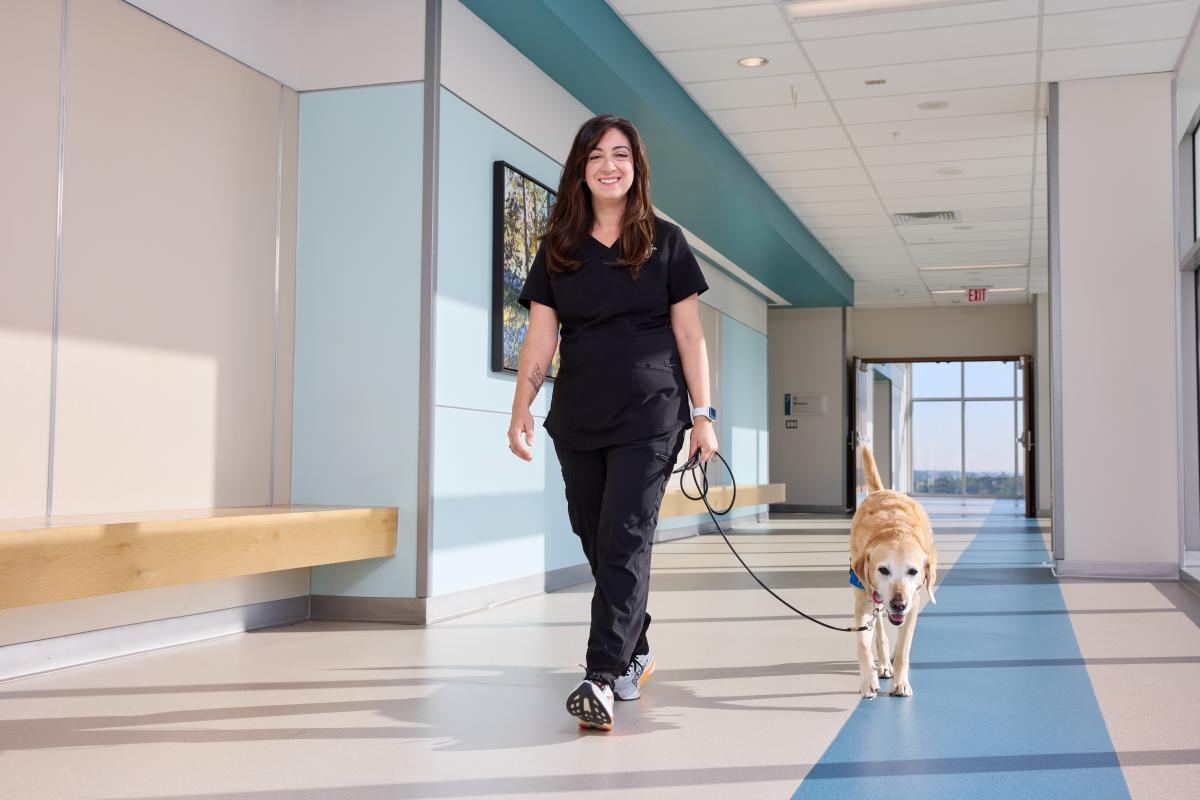
After finishing her tour in the Air Force, Tropiano looked for an opportunity to integrate a facility dog into her work at Adventist HealthCare Rehabilitation.
She became a facility dog handler in 2020 and was matched with Peru—a Labrador-golden retriever mix—trained by Canine Companions, a national service dog organization that provides facility dogs to professionals in health care.
Today, Tropiano and the entire rehabilitation team look for innovative ways to help their patients regain independence. As part of Peru’s training as a facility dog, she is trained in behaviors Tropiano can mold into activities that are incorporated into a patient’s physical, occupational and speech therapy sessions.
For example, “Peru uses her nose to push buttons, so it’s easy to train her to use her nose to ‘kick’ a soccer ball to a patient working on balance, weight shifting, strengthening their legs and hand-eye coordination,” Tropiano explains.
Tropiano has found that having a dog with her during her co-treatment sessions with therapists and patients makes what she does much more effective.
“I don’t know what it is, but when we get patients who refuse to do anything because they’re in pain, when the dog enters the room, they stand, walk, move—whatever we ask them to do,” she says.
Peru elicits natural movements people are afraid to attempt in recovery, motivating them to try things they wouldn’t have before she arrived. Patients who struggle to take 10 steps will more than double that distance when Peru is in the room, Tropiano says, and with stroke patients, especially, the team has seen that the desire to use their hemiparetic side increases with the dog.
“The recurring theme is that they don’t realize they’re doing all the things they’re doing with [Peru],” Tropiano says with a chuckle. “She provides social connection, support and redirection of attention, which changes a person’s experience with pain. People pay a lot less attention to their fatigue or anxiety when they work with a dog; they do more and do it longer, and this has been demonstrated by preliminary research.”
 A Life Protector
Angelisa Andrad
e, a practicum and internship coordinator for the Counseling and Psychology Department at Washington Adventist University in Takoma Park, Md., and a licensed therapist, ha
s some ideas as to why animals can be helpful in the healing process.
“Animals feel emotionally safer than humans at times,” she admits. “They’re non-judgmental, they’re consistent, they love unconditionally and people often find they can be more authentic around their p
ets and other animals than they can around humans.”
Andrade adds that science has backed up why people gravitate toward animals. “Part of it is that animals lower cortisol levels and other symptoms of stress,” she explains. “If someone has experienced trauma, unfortunately it is usually at the hands of other humans and people don’t feel super safe. In these cases, therapy animals can be helpful in sessions, as they also aid in reducing the sympathetic nervous response, which manages fight, flight or freeze—the alarm center of the brain.”
As a previous intake coordinator, Andrade asked patients whether they had any beloved pets. “That was considered a protective factor in their risk for attempting suicide,” she says. “Even if they didn’t want to be talking to me, the moment I asked about their pet, they would light up and talk all about it. That makes a difference and is a very serious consideration when assigning a score on the intake suicide prevention assessment.”
Often, animals can sense emotions before people even recognize them in themselves.
Eisele shares the story of a time she was sitting on the grass with a client while three horses were 30 feet from them. “The client was hitting that peak hard moment, and those three horses picked up their heads and started marching straight toward her,” she recalls. “Two went behind her as a protective barrier and the third came up and put his head right on her lap and his forehead on her chest. She opened her eyes, and there he was.”
In a herd, Eisele says, horses can sync their heartbeats. That way, if a horse on the outskirts senses danger and its heart rate spikes, all the other horses feel it immediately and can act quickly.
“Research is being done to figure out how this works,” she adds, “and researchers have discovered horses can feel human heartbeats from six to 10 feet away. They can bring our heart rates down too.”
The effect of animals on those who care for and spend time with them isn’t limited to the moment—it often lingers well beyond the interaction. For example, in one study of 14- to 18-year-old teenagers who lived in a residential treatment facility, found that equine therapy not only improved self-control and self-image but also decreased arrests and drug use after their release.
Another study revealed that children diagnosed with Attention-Deficit/Hyperactivity Disorder (ADHD) developed better social sharing and cooperation skills after reading weekly to therapy dogs and demonstrated fewer behavioral problems than peers who read weekly to puppets that looked like dogs.
Andrade adds that being around an animal—especially one you are emotionally close to—can aid in the release of oxytocin, the bonding hormone that lowers cortisol and reduces anxiety, stress and depressive symptoms. It’s the same hormone released if you hug someone for 30 seconds.
The Care We Share
The support flows both ways.
Even caring for something as small as a fish can be beneficial to its caregiver. When researchers instructed teenagers who had diabetes to care for a pet fish—which included feeding and checking water levels twice per day and changing tank water weekly—the teens were more inclined to check their own blood glucose levels and review their blood glucose logs with their parents—both critical habits for maintaining their health.
“In the Garden of Eden, Adam and Eve were asked to be caretakers of the creatures,” Andrade comments. “It was part of God’s design that humans and animals would have symbiotic connections.”
Add new comment